First connection
Register a device, put a token on it, watch it come online. Around ten minutes.
You will need something running Linux with systemd: a Raspberry Pi, an industrial gateway, a spare laptop, even a container1. If you have no hardware at hand, the last section connects a device with nothing but openssl and curl.
On an Enterprise instance, replace connhex.com with your domain.
Register the device
Open the dashboard and add a device. A name is all it asks for.
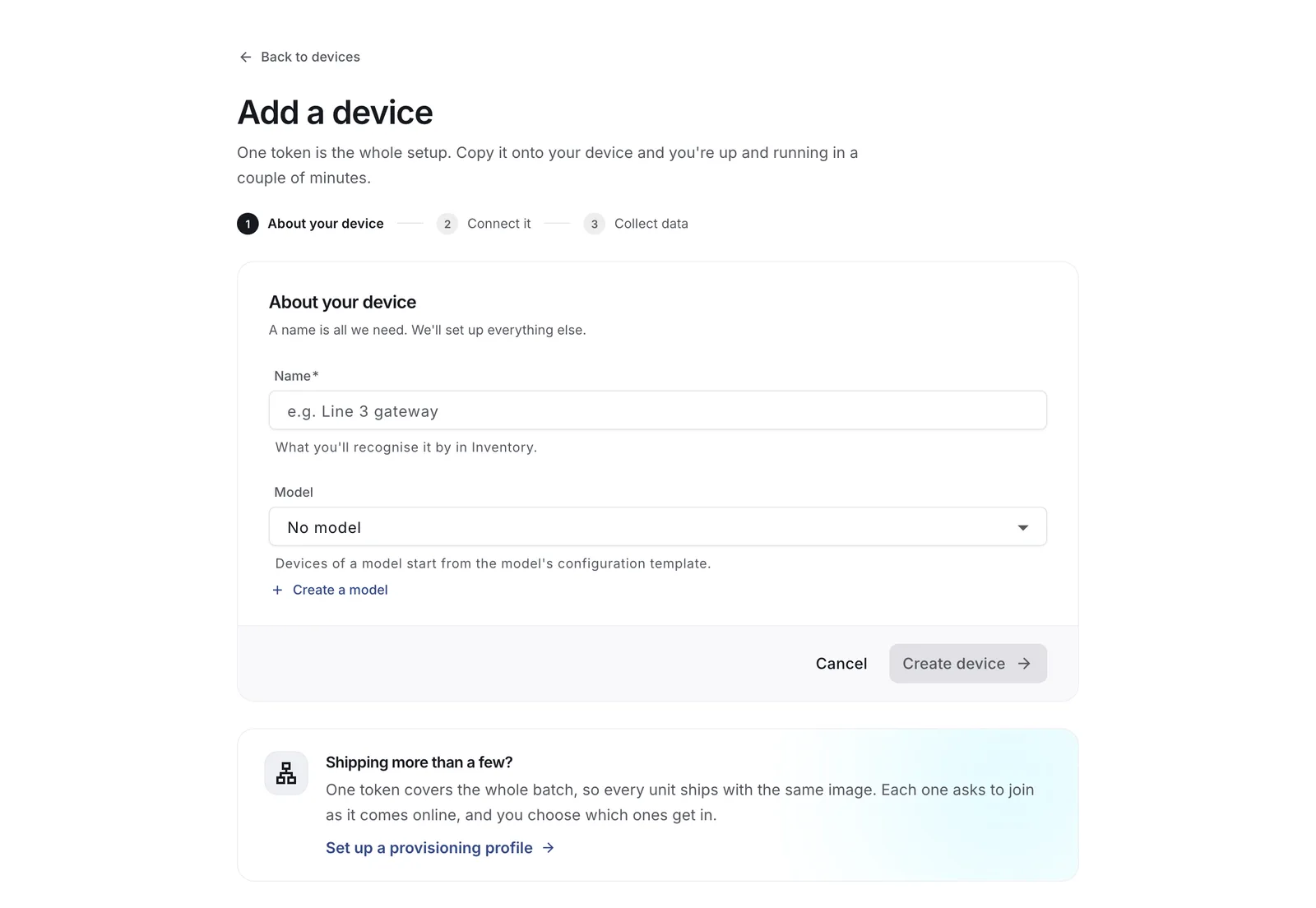
The device appears immediately, and the next screen carries its enrollment token. Leave that page open: it updates itself as the device connects.
Install Connhex Edge
Run the command from that screen on your device. It installs the agent, enrolls the device and starts it at boot:
curl -fsSL https://dl.connhex.com/edge-agent/install.sh | CHX_TOKEN=<token> sh
The agent generates a key pair, asks Connhex to sign it, stores the result and connects. The page you left open turns green.
That is the whole setup. No configuration file to copy, no credentials to paste. Installing Connhex Edge covers packages, release channels and the other install options.
Try it out
Open the device from Devices. Remote terminal gives you a shell on it, and the Commands tab sends it a message, as JSON, SenML or plain text.
The message arrives, and nothing happens with it: the agent has no service listening yet. That is what you build next.
No hardware yet?
A device is four commands away on any machine with openssl, curl and jq. Generate a key, send a signing request, and connect with what comes back. See Enrolling your own firmware, which is also the guide to follow if you are not planning to run Connhex Edge at all.
Where to go from here
You have a device connected, and a way to reach it. It is still silent, though, so the next step is to make it send something: write your first Connhex Edge service.
Two other things worth reading once you move past one device:
- Fleet enrollment, where one token in the image covers a whole production run.
- Firmware updates, for updating those devices once they are out there.